Here's another post on the great political cartoonists from across the pond.
This time it's Victor Weisz, aka "Vicky". He was born in Berlin, Germany on April 25, 1913 to Hungarian -Jewish parents. When the Nazis took over the magazine he was working for in 1935, he fled to England. He then worked as a freelancer for various newspapers, including The Daily Mirror and The Evening Standard until he inherited Philip Zec's job as political cartoonist for That Daily Mirror in 1954.
Here are samples of his work:
In the 1950s, Vicky satirized Prime Minister Harold McMillan as "Supermac" (see below) Unfortunately, Victor Weisz suffered from depression and insomnia. He committed suicide on February 22, 1966
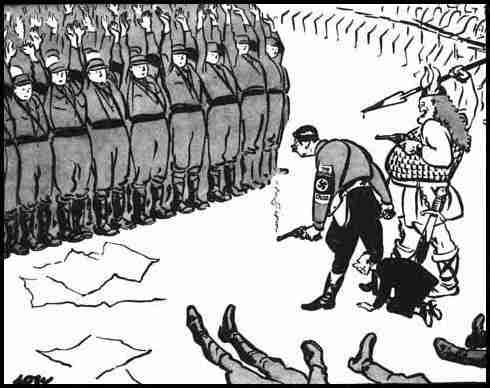
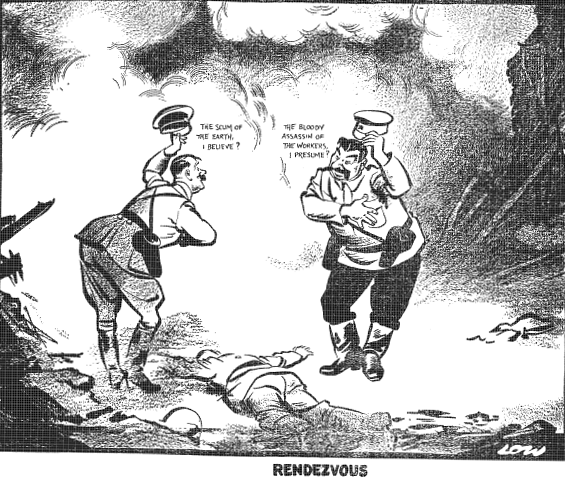
Today I bring you another post on Great Britain's foremost political cartoonist, David Low. He began his illustrious career at The Evening Standard in 1927, where he stayed until 1950, where he began a three-year run at The Daily Herald. After that, he produced cartoons for The Manchester Guardian until his death in 1963.
This is one of Low's most famous cartoons.
Upon his death, Low was described to be, "the dominant cartoonist in the Western world." Many New Zealand students are taught the origins of World War Two with textbooks using his cartoons as illustrations. It was also said that Adolf Hitler had a personal hatred for David Low, and had actually written his name in The Black Book, a book containing lists of the names of people who were to be arrested after the German invasion of Great Britain. That must mean Low was doing his job right.
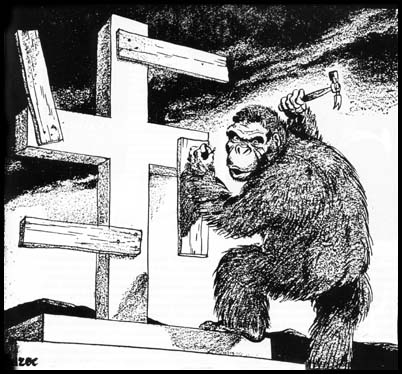
These are a few examples of the great work of British Political cartoonist Philip Zec. He worked for The Daily Mirror in London from the 1930s until 1958.
Today's post is dealing with a topic that I don't think I can fully verbalize. I'm here to talk about movies. However, I'm specifically talking about certain types of movies. These are the types of films that affect a person so much, that they transcend being a mere movie and become an experience.
What I mean by this is that the film affects on such a deep level, that it helps shape your mind, who you are at your core. Also, these are the films that you love despite any and all flaws it may have. These films only come a few times in one's life, or at least for me. I think that's the reason why it's really hard for movies to impress me fully. I enjoy movies, but there are few movies that I love wholly, especially animated films. I think it's because I've studied animation so much that my standards have become impossibly high that I'm bound for disappointment.
I'm looking for that next film experience that will enrich my life.
I've recently rewatched Disney's Snow White and the Seven Dwarfs. We recently bought the Diamond Edition (although it would have been better if we waited for the 2-disc DVD set because we don't have a Blu-Ray player), and I've been reanalyzing my view of it.Let me say that my view of this films has changed over the years. When we first got the videotape of the film, I remember thinking it was a girly film, and not leaving a big impression on me. As I got older and learned more about animation, I learned to respect its place in the history of my beloved artform, but I still didn't think it was that great of a movie. I had a fair share of qualms with it
However, I've grown older and more mature (hopefully) and have come to admire it and like it as well. I think it was after reading Michael Barrier's Hollywood Cartoons: American Animation in Its Golden Age and all of the time he focused on this film that caused me to look it over again. I popped in the VHS tape we had and watched it. To my surprise, I was actually enjoying it. A few more viewings, and I was getting what the fuss was about. it truly is a good film.
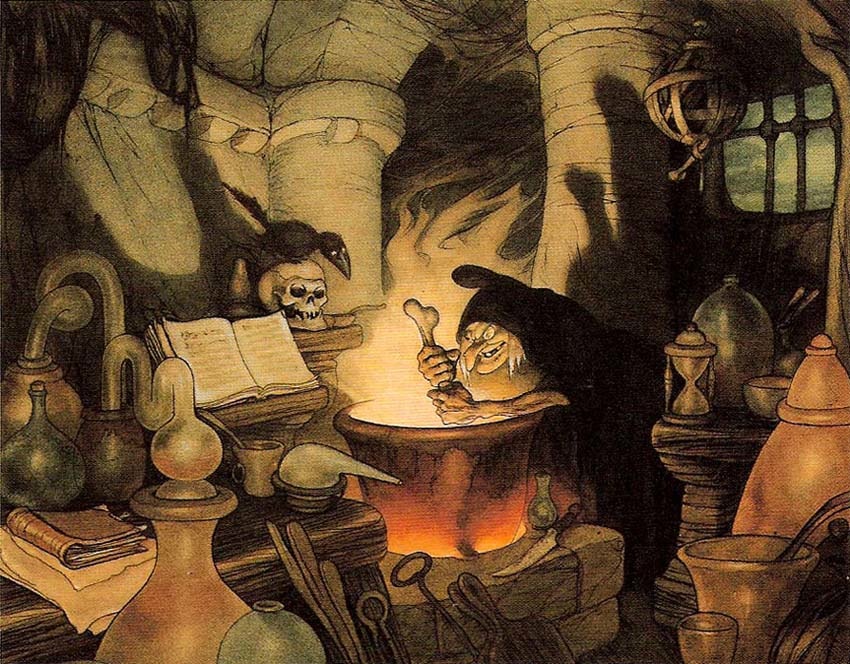
First off, the visuals of the film are spectacular. The backgrounds are so wonderfully painted, filled with a wide variety of colors, but they're more muted colors with a wide variety of shades. More animated movies should watch this to get a look at what a good color scheme is. It also provides excellent atmosphere. I can really feel the influence of artist Gustaf Tenngren in the film. I think my favorite scenes for pure atmosphere are the scene in which Snow White runs into the forest and it looks like the forest is alive and ready to devour her and the scene with the Hag Queen in her dungeon.
Secondly, the animation is fantastic. All of the characters are animated wonderfully, giving them a great depth. I know a lot of people have heaped praise on them already, but I have to single out a couple of animators for their work. First off, Fred Moore and Bill Tytla did fantastic with the dwarfs. They added such life and vitality to them. Of course, it helps when the voice actors do a good job giving you juicy material to work with. However, the dwarfs that really leave me entertained are Grumpy and Dopey. They're the ones that have the most personality. Grumpy is more than just grumpy. He's superstitious, wary of strangers, and plain stubborn to boot. However, we see him transform into a more kind-hearted character as he falls in love with Snow White. That and I really do suspect that he is the true leader of the group. He just lets Doc think he's in charge, but when push comes to shove, Grumpy leads the charge. All you have to do is look at the big chase scene at the climax and you'll see my point.
Dopey is the other Dwarf I like because he reminds me of Harpo Marx. Childlike and a bit impish. That, and he is a horny little devil. Don't believe me; watch the scene where he tries to get one last kiss from Snow White. There's more than just affection on his mind.
The other animators I have to give praise to are the artists who worked on The Wicked Queen. Actually, I've noticed a little quirk in the animation that helps provide quite a contrast in her character, almost like revealing two different sides of her. When Art Babbitt and his assistants animate her (when she is in her royal form), the animation is graceful, precise, and cold, very much representing her as we know her. In her animation, we do see subtle facial expressions, like the best actors of the time. Her body language is a bit melodramatic, but it adds such emphasis to the scenes she's in. In contrast, the Hag Queen is more hammy and openly evil. She;s not cold, but just evil in that pure sense. She also has hammy, but also subtle body gestures. It's almost ;like she is revealing her true self, her more human emotions. Norm Ferguson and his assistants did a masterful job.
Now, I still have a few qualms about the film. Some of the most important story points are hard to believe. First off, Snow White's romance with the Prince feels forced, but I guess I can chalk that up to fairy-tale conventions. Secondly, I cannot believe that the Dwarfs would all fall instantly in love with her that fast. If I'm supposed to believe that these dwarfs are living, thinking characters, then I can't accept that there wouldn't be any hesitation to keep Snow White in the house. Maybe I'm missing something about her character. Perhaps I just don't understand the character dynamics of this movie. Can someone explain that to me?
However, apart from those little trepidations, everything else about the film is marvelous. I love the musical score and the songs. My favorite is still "Heigh-Ho".
When talking about story, the pace of the storytelling is marvelous. Every scene of the film flows, even if the scenes are just little bits of padding, like the scenes with the small animals. Come to think of it, they may not be padding at all. Perhaps these animals help to serve Snow White's character. Their undying devotion perhaps helps to highlight her own essential purity and goodness.
Also, it makes a great use of editing, montage, and all other tools of filmmaking. I would have to study more about that aspect of film in order to go in-depth.
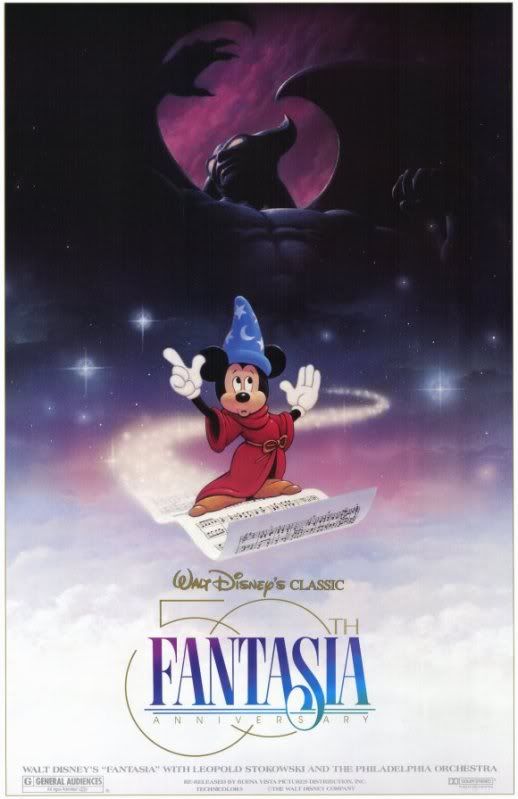
I finally understand why this is a masterpiece. I understand why Walt was so proud of it.
Pathos. The word brings to us images of suffering and despair, whether it be from films or from life itself. However, what does it really mean?
Webster's Dictionary (at least the version I have) states that pathos means, "the quality in something which arouses pity, sorrow, sympathy, etc." This concept has intrigued me for quite some time. I've heard many people refer to the word when it comes to entertainment. Disney animators talk about how it makes up the core of their character animation. John Kricfalusi has said that Disney films are full of fake pathos. How does one tell the difference between "Fake Pathos" and "Genuine Pathos"? Well let's take a look at different examples of pathos in the media, particularly film, and film animation.
Jim Smith, animator/manly cartoonist, has described his definition of pathos as, "Emotional content, not just sadness or sentiment, but honest emotion as opposed to contrived."
Mr. Smith, while discussing the topic with yours truly, has cited the classic comic strip "Popeye" by E.C. Segar as an example of genuine pathos. For example, in one strip, Popeye gives money to an orphanage because he was once an orphan himself. Jim Smith gets a manly lump in his throat every time he reads it. Sorry I couldn't find the matching picture, but spanking can be a source of pathos, as it is a common experience to children, representing a parent's disapproval.
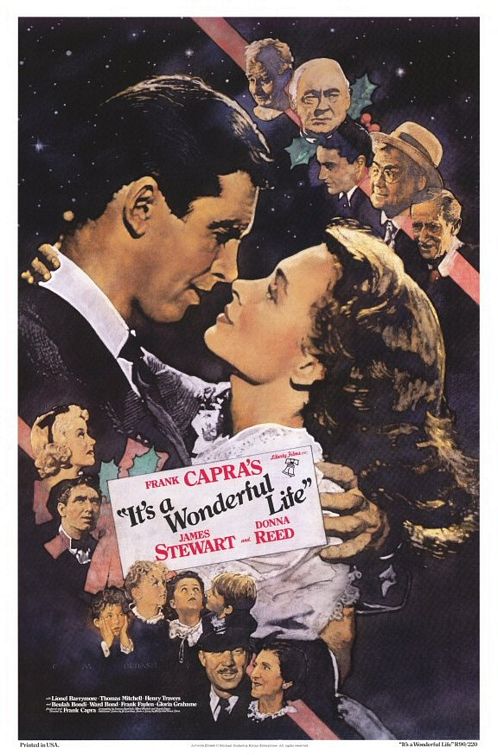
Mr. Smith has also mentioned the beloved Christmas classic "It's a Wonderful Life" as a strong narrative with genuine pathos. In particular, he cites the line "Zuzu's petals" as a tearjerker. I have nothing to argue against it (since I've never seen it), so I'll go along with it. It seems that even some of the most bitter of curmudgeons are moved by this story. I'll attribute that to a great performance by Jimy Stewart and wonderful direction by Frank Capra.
Now, what is an example of "fake pathos"? The best example I could find is the story of The Vampire's Assistant. I remember seeing this with my cousin while we were at a Bainbridge Island theater. It concerns two boys, Darren and Steve (pictured below). Both go to a freakshow, where Steve recognizes a vampire working for them named Crepsley. Steve wants Crepsley to turn him into a bloodsucker, but is refused for having "bad blood" (How does that work?). When Steve finds out that Darren has been made into a vampire, Steve feels betrayed and swears revenge.
We're given a bit of backstory for Steve, where it states that his parents never notice him, or some such crap, and how he feels like Darren stabbed him in the back by becoming a vampire, but there's no indication of why we should give a damn. He actually says in the movie that his friendship with Darren is secret, and he doesn't want people to know about it. All in all, I don't feel any sympathy for him, so there goes the dark but sympathetic anti-hero angle, and he's too much of a whiny dipshit to take seriously as a villain. I was praying he would have his head ripped off by a random werewolf attack. I actually got the same feeling about the characters, particularly the villain, of Meet the Robinsons.
Perhaps that's the difference between genuine and fake pathos: the strength of the story and the emotional investment in the characters. The reason why we feel sympathy for characters like Popeye is because they have endeared themselves to us, because they are strong interesting characters. For example, back in the 20s or 30s, Sandy the Dog, of Little Orphan Annie fame, was injured and no less than Henry Ford himself sent a letter to the syndicate that distributed the strip asking if Sandy would survive. That's the kind of power a good character can have on people.
Another way of distinguishing true and fake pathos is how hard one tries to get people to sympathize with characters. John K. has stated that Disney uses camera cuts and music, as well as sad background stories, to achieve pathos. I find that to be a major blunder, especially in recent animated films. Let's take a look at Meet the Robinsons again. The film tries too hard to find empathy, but the characters are so nondescript and lackluster that I was left cold. However, they used every trick Disney could use to get an emotional reaction, from the sad music to the main character's backstory as an orphan. Unfortunately, I wasn't feeling it. Too forced for my tastes. Does that make me coldhearted?
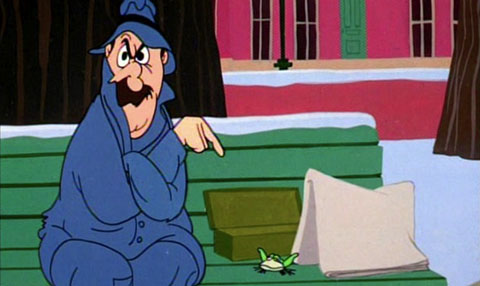
A perfect example of a film with true pathos, despite its length and lack of familiar characters, is the classic Chuck Jones cartoon One Froggy Evening. It succeeds on narrative and use of archetypes, but also because everything feels as if it occurs naturally. Even though Chuck Jones' cartoons sometimes feel as if the characters are preordained to act a certain way, the reactions feel natural. Let's take a look at our main character. He's a joe-shmoe working to make a living. He finds the singing frog and sees a way to fame and fortune, a way out of the drudgery, like all of us want. However, he is foiled at every turn by some divine interference which states that nobody but him can see the frog sing and dance.
That causes him to go from this... To this Tom Kenny has stated that he found this cartoon to be "existentially sad".
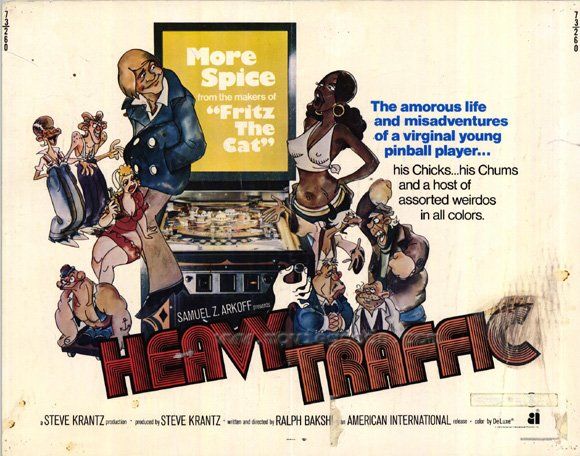
I get a similar reaction when I view Ralph Bakshi's Heavy Traffic. It seems to be the whole feel of the film. One scene in particular always moves me in way I can't quite describe. It is the scene at the nostalgic nightclub, where Michael meets up with his mother Ida. Afterwards she has a drunken conversation with him, she wanders where soon she is surrounded by old family photographs. She soon sees her old wedding photo, and finally collapses, realizing how she has wasted her life, and youth, by being married to Angelo Corleone. It's a very quiet, but powerful scene. There are no tears, but simple realization and resignation. I don't tear up, but I feel the complete despair and emptiness of Ida.
You can view it here on this clip from YouTube.
Thank you for reading my little mini-essay on pathos. I guess ultimately, pathos lies in the eye of the beholder. It's all up to you.
Now, to finish, I'm going to show you one of the few scenes in film that causes me to bawl like a baby. If you don't shed at least one tear, then you are a heartless communist.
Until next time boys and girls. Thank you Jim Smith for the inspiration.
I have been thinking about my heroes in the world of cartoons and animation. I've been reading up on a lot of these people for quite some time. I'm quite surprised by the wide variety of opinions about certain figures in cartoon history.
For example, we have the established view of history, with the respected critics and their views of events, such as the view of Disney as the godsend and the be-all-end-all of animation, and that the other studios produced mere "entertainment". That would be the view that Disney wants to impart on us. Another view offers us the view of Disney as the Anti-Christ, who sucked all the joy and made cartoons rebel against their inherent nature. This goes on for every figure in the medium, from animators like Freddie Moore and Rod Scribner, to directors such as Chuck Jones and Ralph Bakshi.
Ever since I started visiting animation blogs, a whole new world has opened my eyes and my mind. I've only ever heard one side of the story about these legends. It was at first hard to listen to such criticisms, because I had pretty much been indoctrinated. For example, John Kricfalusi has stated on a few occasions about Chuck Jones' habit of having Daffy being the loser in those cartoons simply because he preordained it. Or how he picks apart a lot of Disney films, a lot of which I have grown up with. This was a little hard for me to deal with me, because so much praise had been placed upon them that I just began to parrot them.
Now, I've heard opposing opinions and have since then gained a more rounded understanding of these people. I can see a bit of how Chuck Jones can seem to have a sense of preordainment towards his characters, or how Ralph Bakshi does have weak storytelling abilities.
Visiting these sites have opened my eyes to my heros faults, but allowed me to view their strengths as well. I now have a more analytic, discerning mind that allows me to cut through the bullshit the studios throw at us.
The point I've gotten from all of these blogs and postings is that you must understand your influences, and learn from their strengths and failings. Thus you can learn to avoid those mistakes, and thus keep from repeating them. That is something that I don't see in the media today. You hear a lot about a person's artistic influences, but you don't hear about what they learned to keep and what to avoid.
I know this seems like an obvious statement to make, but there are those that don't learn this. They don't learn to have a discerning eye. Thus they never advance as artists. Current animation studios keep rehashing all of the ideas of the old studios, with out understanding what made those old cartoons great in the first place. Cartoon Network works a lot in that angular, 1950s style, but don't know how to properly draw that style.
I think this industry, in fact all industries need to learn to use critical thinking and analysis. Sorry if I seem to be rambling, but this was just something I had to write down. I couldn't think of any proper order to put this in, so I'm just writing what comes to mind. Thanks to those who actually read this insane babbling.
For reading this, I shall reward you with some funny cartoons.
Have Fun,