Search For Treasures

Wednesday, June 24, 2009

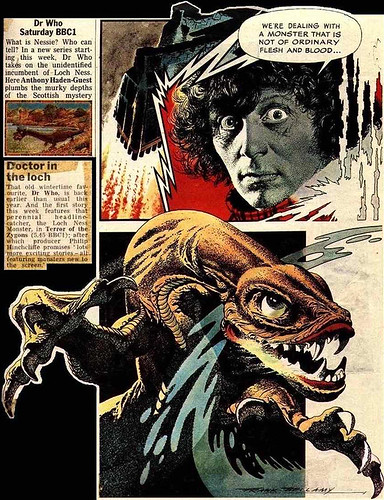
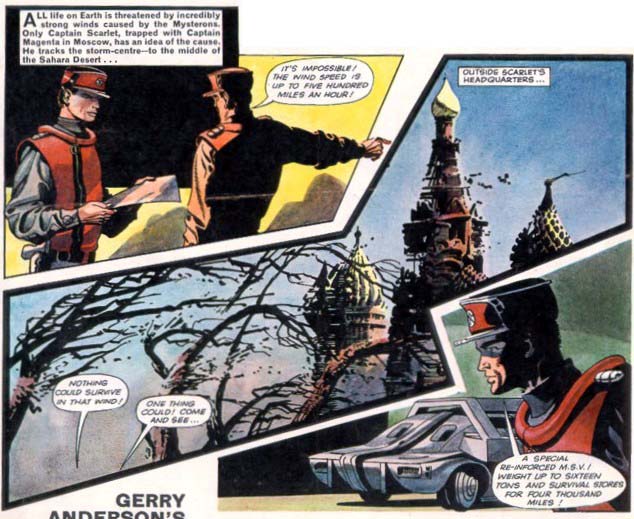
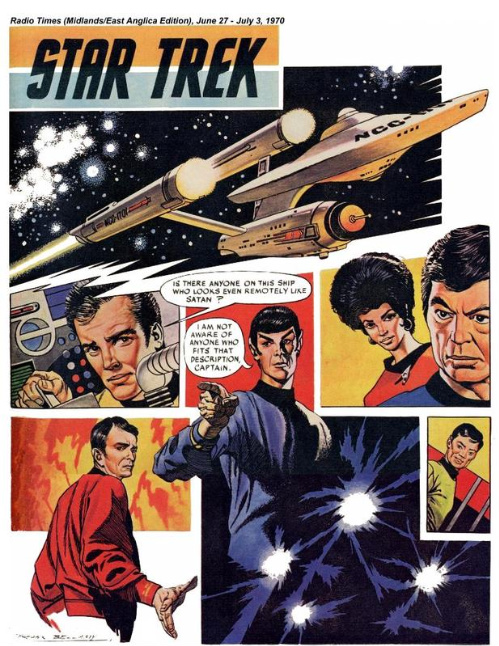
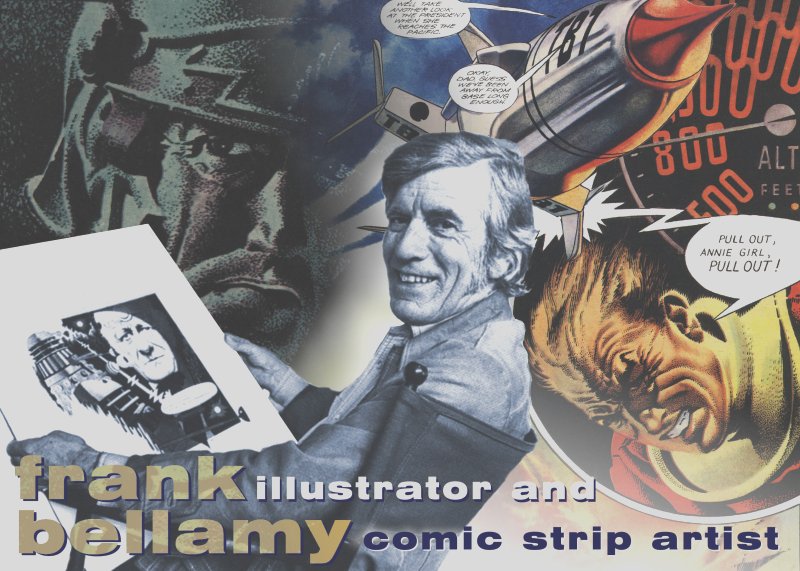
Frank Bellamy: The Good Doctor Artist


This is the work of Frank Bellamy, a British illustrator/comic book artist. He worked in the pages of TV Century 21. He is best known for his work on comics and illustrations for properties such as Doctor Who, Thunderbirds, as well as Dan Dare and the newspaper comic strip Garth.

Excellent page layouts, quite easy to read, and fantastic use of color. Obviously the British had a bit more respect for the medium than we Yanks.

For more information about Frank Bellamy as well as to see more artwork, please visit the site below:

http://frankbellamy.blogspot.com/

Happy Trails

Wednesday, June 17, 2009

Character Design and Its Role in Animation.

Today boys and girls, we venture into the role of character design in animation. It is a part of animation that is largely neglected in modern work (at least in major studios).

John Kricfalusi, a man whom I respect, even if I don't always agree with him, has a few good points about character design.

His five points of character design:

1.) Functional - Understandable logical form
Simple sensible forms
Can be moved easily

2.) Aesthetic - Pleasing Balance of shapes

3.) Recognizeable - Distinct from other characters

4.) Personality - Allowing the viewer to know a character's personality simply by the way they
look

5.) Original - Not a knock-off of a previous character

Fore more of this post go to: http://johnkstuff.blogspot.com/2007/08/character-design-primer.html

Now, I would like to add a sixth part to that list. It's one that I've been thinking about for awhile.

6.) Believable - Allowing the viewer to believe in the story you're telling or the world your
characters reside in.

Let me explain what I mean. I mean that some designs are better suited for different styles of story. Wouldn't characters looking like these...

would look very strange in a more film noir-like cartoon, wouldn't you say?

On the other hand, animation is all about caricature, and if we lose that element, animation is no longer exciting and it becomes a pale imitation of live-action. It would be a vast and grueling undertaking for animators to try and move character that looked like this


or like these


The question then arises: "What is that right level of caricature where the characters are believable in their environment, but are still fun to animate?"

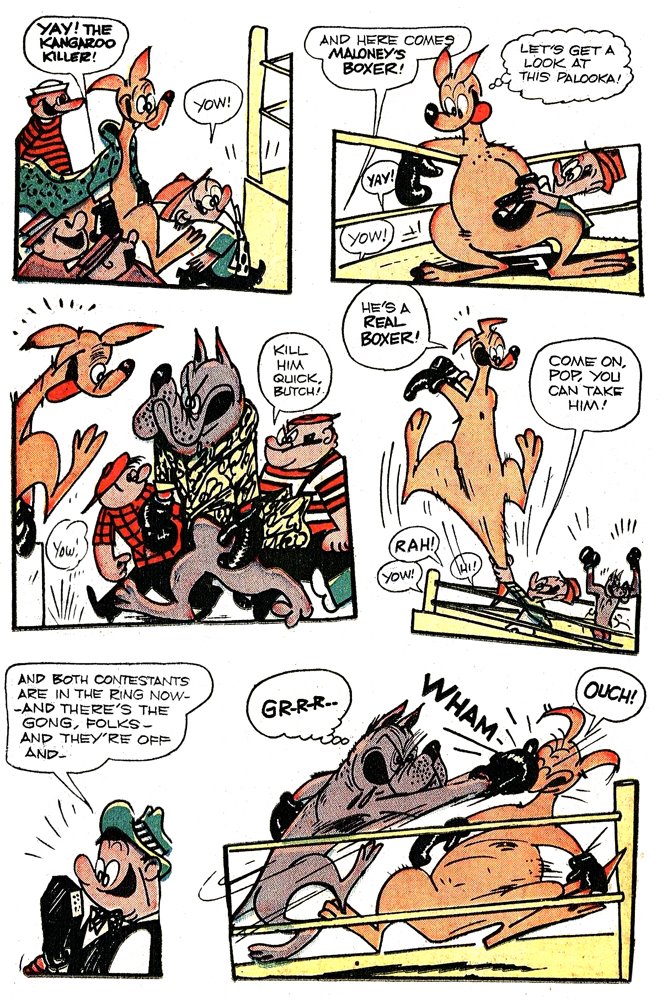
A great example would be the character designs of the characters in Ralph Bakshi's "Hey Good Lookin'". Each of the characters, even minor characters, has a distinct look to them, different to every other person, just like real people, but they still have a cartoony feel, much like what Jack Davis or Mort Drucker do, a MAD Magazine feeling.


Vinnie (above) looks nothing like Crazy Shapiro (below)


If you want to see what I'm talking, go over to YouTube and watch the movie. You'll see what I mean.

Many of the side characters were designed by the late and wonderfully talented artist Louise Zingarelli. The main characters were done by David Jonas. I wish there was more "Hey Good Lookin'" artwork in the Bakshi book.

Another good idea would be to look at some of the old adventure strips like "Dick Tracy". Chester Gould was a great storyteller, but was also, as he described himself, a "big-foot cartoonist that got side-tracked."


I know that character design is only one step in the animation process, but it should be given careful consideration. From there we can build upon it and make a great film. However, this is only my opinion. I gladly await to hear yours.

Happy Trails

Saturday, June 6, 2009

Great Animation: What Is It?

Hello again dear readers. I know I've been gone awhile, but not that many people read my blog, and why should people since there are so many others that much more knowledgeable about the subjects I talk about out there.

Okay, sorry about the self-pity. Now onto today's subject.

Ever since I decided to become an animator and working towards that goal, I have looked over many animation blogs (just look at the side of this page to see how many I look over), and reading over their articles, a thought keeps popping back into my mind...

What, in fact, does make great animation?

I've heard one argument after another by many different sources, such as Michael Barrier, Bob Jaques, John Kricfalusi, and Michael Sporn.

Michael Barrier, when discussing Milt Kahl and his work, had this to say:

"Those characters, and others that Kahl designed and animated later, have what seems to me not real warmth but a calculated appeal whose artificiality Kahl's beautiful drawings can't quite conceal."

"Ironically, it is "sincerity," that Disney shibboleth, that is most conspicuously lacking in Kahl's work."

What exactly is "sincerity"? Does it exactly equal good animation. Isn't good draftsmanship enough. Can an animator be a horrible draftsman, but if he/she has "sincerity", can they make great animation. I have actually heard that said about legendary animators Art Babbitt and Ed Love, although I can't remember where.

He also had an interesting statement he wrote about Don Bluth animation-style, which happened to appear in his review of the 2002 Disney flick Treasure Planet:

"It is the kind of animation that results when animators try to achieve the vaunted Disney "sincerity"—that is, animation in which the characters really seem to believe in what they're doing—by having the characters behave as if they know that they're appearing in a film.

What's involved is not mere staginess, the usual mugging or playing to the audience. In Bluth animation, the characters are not entertaining hams, or, even less, ironically self-aware; instead, they are as painfully awkward as adolescents on a first date. The characters' insistent self-awareness is what makes Bluth animation so uncomfortably distinctive."

These criticisms leave me wondering how one would leap to that conclusion. Those are pretty harsh words for Mr. Bluth and his disciples. I guess that these criticisms are the result of how one feels while watching it.

Here's a quote from Max Fleischer about how he thinks animation should be: “If it can be done in real life, it’s not animation”.

If that's the case, then the work of his studio would reign supreme, seeing as how everything in their films could never be done in real life. Have you ever seen a woman with a phallic nose transform into a frying pan , complete with two eggs. Or how about a chicken coop morphing into a demonic face while chasing a chicken thief.

John Kricfalusi and Thad Komorowski have similar ideas. While they do differ about specifics (and the fact that they hate each other guts), they both believe in animation that is fun and entertaining, such as the work of Irv Spence in the Tom and Jerry series or Rod Scribner's work for Clampett.

Animation director Michael Sporn has this to say about great animation:

"My preference will always go to the flawed yet emotional animation."

The layfolk often see that quality animation means smooth full animation, like one would get from a feature film.

I guess the ultimate answer to this question is it's open to interpretation. I guess great animation is what you want it to be. My personal preference is animation that has specific facial and body expressions. This allows you to know what the character is all about. I would like to read what you readers have to say about this. Drop a line in the comments.

Until then, Happy Trails.
Wednesday, February 11, 2009

Help Me: I'm Technologically Illiterate!

Now, many would think that, as I am twenty years old and living in the computer age, that I would know the ins and outs of computers and be able to do anything with one. This is, unfortunately, not the case. It is only by the grace of God that I'm even able to use the basics of Blogger.

Now, as I am an aspiring cartoonist, I would like to post my attempts with using construction and other drawings. However, I don't know how to use the scanner. Now, I could probably learn to use the scanner part, but I need to know how to upload all of that stuff I want to upload, like my construction drawings and my collection of comics.

Next, I need to know which program allows you to overlap the original source of a drawing and a person's copy. Also, how do oyu upload film clips and film snaps? I ask for the help of my friends on Blogger (Joe Bloke? Fellow cartoonists?)

Just leave me a comment and that will help.

Thursday, February 5, 2009

The Betty Boop - Cab Calloway Trinity

Today I only have to show you the amazing cartoons showcasing the wonderfully talented Cab Calloway and surreal animation of the Fleischer Studios. It's sad they no longer make these types of cartoons.

Minnie the Moocher (1932)

I personally prefer the more curvaceous Betty. Don't you?

Snow White (1933)


The Old Man of the Mountain (1933)

I love the design of The Old Man.

Sorry for these lame updates, but I need to figure how to use my scanner and get Photoshop so I can post my construction drawings and various comics.

Until we meet again

(Special thanks to Joe Bloke for commenting on the past couple posts. I'll try to post comics for him next time.)

Friday, December 19, 2008

"What If?" History: A Golden Age Termite Terrace Feature

Today my loyal followers, I ask an interesting question. Maybe a pointless question, but it's one I will ask nonetheless.

Could the men and women of Termite Terrace have created a feature film during their Golden Age?

There are arguments for both side in my opinion, and I think they both present a strong case.

Arguments for Why
Reason #1: Disney wasn't producing any big features at the time. They were producing the "package films" at this time. Because of this, Disney would not have been much competition for them.

Reason #2: World War Two made the Warner Brothers characters extremely popular. Warner Brothers had the right attitude for the time: brash and irreverent. Disney cartoons by this time seemed too dull and tame. Bugs Bunny toppled Mickey Mouse as the most popular cartoon character. The attitude of the cartoon studio reflected the general output of the Warner Brothers studio at large. Bugs Bunny has the same sarcastic attitude as Humphrey Bogart and Jimmy Cagney.

Reason #3: Termite Terrace produced a plethora of interesting and funny characters that are based in ACTUAL reality.

Reason #4: They could have taken the humor prevalent in their shorts to the features level. A feature from Termite Terrace could have been similar to the work of the Marx Brothers early films or maybe Laurel and Hardy. There could have been asolid situation idea, but was more focused on comedy rather than plot.

Reason #5: The draftsmanship of many of the animators reached new heights during the Golden Age. Great examples include the animation of Hitler in "Russian Rhapsody" or Scribner's animation of Humphrey Bogart in "Bacall to Arms"


However, despite these strengths, there were a lot of reasons working against them and why they couldn't make a film.

Arguments for Why Not
Reason #1: Three words: World War Two

Reason #2: The strength of their characters came from developing them over a period of many cartoons. The Bugs Bunny we know and love was not fully formed, not even by the time of Tex Avery's "A Wild Hare". In a normal animated feature, you have less than 90 minutes to develop a character, and usually the characters aren't as interesting as the ones in the shorts.

Reason #3: Would people have accepted a feature from the same studio who created Bugs Bunny?

Reason #4: With a staff smaller than the one at Disney, to make a feature would have meant that the production of Looney Tunes and Merrie Melodies would have had to cease for awhile, and do you think that upper-management would have allowed that?

Reason #5: The studio probably wouldn't have promoted the film the way Disney promoted theirs. They didn't have the foresight to see how popular Looney Tunes would become, and hindsight is 20/20.

Reason #6: Budgets would go down in the post-war years

Reason #7: Unlike Disney, Warner Brothers different units didn't have a unified style. There was a house style, but each unit had a different variation of said style
Bob Clampett

Friz Freleng

Chuck Jones

Robert McKimson

Final Verdict: I don't think it would be possible. Unless Termite Terrace had the same resources and funds that Disney had, it just can't be. Oh well, a guy can dream, can't he?

Thanks for listening and Merry Christmas to all.

Monday, November 17, 2008

Barnacle Max the Fleischer

In this edition of my blog, I'm here to discuss the relationship between the popular sea shanty and the dynamic duo of animation, the Fleischer brothers.

Starting out as a bawdy (to say the least) drinking song about the exploits of a fictional sailor, it eventually became a popular song in 1928 when Bix Beiderbecke and Hoagy Carmichael recorded a more toned-down version.

I believe this video contains the Hoagy Carmichael version


In 1930, the Fleischers animation studio decided to use this song as the basis for one of their new Talkartoons, starring Bimbo and his new girlfriend, Miss Betty Boop. Watch for the wonderful Grim Natwick animation up in Betty's apartment.

1930 Talkartoon


Just five years later, Fleischer once again returned to the old sailor tune so he could face the latest Fleischer, Popeye the Sailor. Put those two two together and you get one of my favorite Popeye cartoons.

1935 Popeye cartoon


It makes me wonder why the Fleischers decided to make all those cartoons about the dirty sailor song. Was it simply a lack of story ideas, or did this gruff and dirty tune appeal to the urban sensibilities of the New York studio? I'll leave that to you.

Until Next Time, Boils and Ghouls