Search For Treasures

Showing posts with label Animation. Show all posts

Wednesday, January 18, 2012

Oscar Grillo Commercials

Hello again. Sorry it's been so long. I've been dealing with school.

Anyway, for a quick post, here are some wonderful animated commercials from the talented animator/director, Oscar Grillo. I don't know his exact professional history, but I know that he was in London during the time Richard Williams was producing commercials under the tutelage of Golden Age animators Grim Natwick, Art Babbitt, and Ken Harris. Oscar Grillo eventually founded his own studio to produce commercials of his own. Here are but a few samplings of his work.


The first two here are advertisements for Welsh TV station S4C-TV. These are very interesting specimens, as the animation style is a bit more UPA-esque, with a little mixture of Warner Brothers. These show that stylized or limited animation need not be a hindrance. It doesn't matter how many drawings you have, but that the drawings you do have are used to tell your story or convey your message in a meaningful and entertaining way.


This next one is for Perrier water. I love the design of the genie and the watercolor designs of the backgrounds. The backgrounds remind me of the backgrounds for the 30s Disney and Fleischers cartoons.


This spot is for Heineken Beer. This spot is reminiscent of the early Tex Avery cartoons (in particular the WWII toon Blitz Wolf). I am quite surprised that Disney would allow an ad for Heineken to use their song Who's Afraid of the Big Bad Wolf. Oh well, it makes for an entertaining ad.


This one is my favorite of the group. It is an ad for Oddbins Wine Tasting. Why it's a favorite of mine is that the design of the characters were done by legendary cartoonist/illustrator Ralph Steadman. The music is provided by the renowned Spike Jones and his City Slickers. This spot makes me yearn for an animated version of Fear and Loathing in Las Vegas, with characters based on the Steadman illustrations.


These are but a taste of the work Grillo has done. There are many more on YouTube, along with the ads by Richard Williams and Tony White. I hope you've enjoyed this.

Until Next Time.

Sunday, December 19, 2010

Richard Williams Commercials

Richard Williams is a fascinating figure in animation history. He was a man with great ambitions for animation, but unfortunately was undone by his lack of financial stability.

During the 1970s, he brought some of the best of the Golden Age animators such as Art Babbitt, Ken Harris, and Grim Natwick to England to teach his animators how it all was done. That helped improve the quality of the animated commercials Richard Williams provided by lightyears. Here are some samples of the work his studio did.


The only issue I have with these is Williams' insistence of animating on ones. Now, in some cases, it could be beneficial such as if you were animating in a more realistic fashion. However, it can be a bad habit if you are animating more cartoony characters such as Goofy and Donald Duck in the Fanta commercials. Doing it all on ones gives the feeling as if they're somewhat floating and not entirely grounded.

I hope to reach that level of expertise that Richard Williams and his animators reached in these commercials.

Friday, August 20, 2010

Are My Dreams Futile?: A Litany of Woe

I have been thinking about this very often, and it still plagues me.

Ever since I really got into animation, I have wanted to make feature films with my own stories and characters. I would like to do more adult stories (not tits and ass stories). I had hoped to contribute something positive to the world of animation.


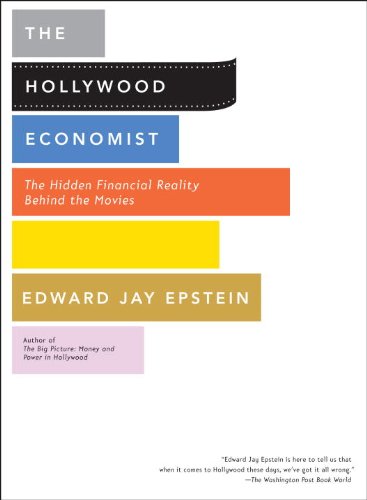
I have always had my doubts about if I would do that, but youthful optimism (or idiocy) has always prevailed. However, ever since I have read The Hollywood Economist: The Hidden Financial Reality Behind the Movies by Edward jay Epstein has almost killed my hopes.

In this book, Epstein shows us how people earn and make money in the world of film. In today's Hollywood, so much money is poured into certain films, that Hollywood executives do everything possible in order for the film to make money. That is why so much of Hollywood emphasizes franchise films. They are more guaranteed, at least in their minds, to make money for their companies.

This makes me fear for those who strive for originality, particularly those in the world of animation. Even in Independent and Foreign circles, it is getting harder to get films made. The film companies like to make films that have a strong American backing.

Now, I know there have been a lucky few who have had the chance to make their own films, like my hero Ralph Bakshi, but that occurred during a time of great upheaval, when the old studio system was dying off and new voices were encouraged. Today's Hollywood encourages routine and almost discourages new voices. One example of this is mentioned in Epstein's book, when an aspiring filmmaker brought forth an idea to a film executive. The executive said, "Too bad this movie hasn't been made before, or we could have done the remake."

Need I say more?

Saturday, November 7, 2009

Evaluating Admiration and Role Model

I have been thinking about my heroes in the world of cartoons and animation. I've been reading up on a lot of these people for quite some time. I'm quite surprised by the wide variety of opinions about certain figures in cartoon history.

For example, we have the established view of history, with the respected critics and their views of events, such as the view of Disney as the godsend and the be-all-end-all of animation, and that the other studios produced mere "entertainment". That would be the view that Disney wants to impart on us. Another view offers us the view of Disney as the Anti-Christ, who sucked all the joy and made cartoons rebel against their inherent nature. This goes on for every figure in the medium, from animators like Freddie Moore and Rod Scribner, to directors such as Chuck Jones and Ralph Bakshi.

Ever since I started visiting animation blogs, a whole new world has opened my eyes and my mind. I've only ever heard one side of the story about these legends. It was at first hard to listen to such criticisms, because I had pretty much been indoctrinated. For example, John Kricfalusi has stated on a few occasions about Chuck Jones' habit of having Daffy being the loser in those cartoons simply because he preordained it. Or how he picks apart a lot of Disney films, a lot of which I have grown up with. This was a little hard for me to deal with me, because so much praise had been placed upon them that I just began to parrot them.

Now, I've heard opposing opinions and have since then gained a more rounded understanding of these people. I can see a bit of how Chuck Jones can seem to have a sense of preordainment towards his characters, or how Ralph Bakshi does have weak storytelling abilities.

Visiting these sites have opened my eyes to my heros faults, but allowed me to view their strengths as well. I now have a more analytic, discerning mind that allows me to cut through the bullshit the studios throw at us.

The point I've gotten from all of these blogs and postings is that you must understand your influences, and learn from their strengths and failings. Thus you can learn to avoid those mistakes, and thus keep from repeating them. That is something that I don't see in the media today. You hear a lot about a person's artistic influences, but you don't hear about what they learned to keep and what to avoid.

I know this seems like an obvious statement to make, but there are those that don't learn this. They don't learn to have a discerning eye. Thus they never advance as artists. Current animation studios keep rehashing all of the ideas of the old studios, with out understanding what made those old cartoons great in the first place. Cartoon Network works a lot in that angular, 1950s style, but don't know how to properly draw that style.

I think this industry, in fact all industries need to learn to use critical thinking and analysis. Sorry if I seem to be rambling, but this was just something I had to write down. I couldn't think of any proper order to put this in, so I'm just writing what comes to mind. Thanks to those who actually read this insane babbling.

For reading this, I shall reward you with some funny cartoons.
Have Fun,


Until next time kiddies.

Saturday, June 6, 2009

Great Animation: What Is It?

Hello again dear readers. I know I've been gone awhile, but not that many people read my blog, and why should people since there are so many others that much more knowledgeable about the subjects I talk about out there.

Okay, sorry about the self-pity. Now onto today's subject.

Ever since I decided to become an animator and working towards that goal, I have looked over many animation blogs (just look at the side of this page to see how many I look over), and reading over their articles, a thought keeps popping back into my mind...

What, in fact, does make great animation?

I've heard one argument after another by many different sources, such as Michael Barrier, Bob Jaques, John Kricfalusi, and Michael Sporn.

Michael Barrier, when discussing Milt Kahl and his work, had this to say:

"Those characters, and others that Kahl designed and animated later, have what seems to me not real warmth but a calculated appeal whose artificiality Kahl's beautiful drawings can't quite conceal."

"Ironically, it is "sincerity," that Disney shibboleth, that is most conspicuously lacking in Kahl's work."

What exactly is "sincerity"? Does it exactly equal good animation. Isn't good draftsmanship enough. Can an animator be a horrible draftsman, but if he/she has "sincerity", can they make great animation. I have actually heard that said about legendary animators Art Babbitt and Ed Love, although I can't remember where.

He also had an interesting statement he wrote about Don Bluth animation-style, which happened to appear in his review of the 2002 Disney flick Treasure Planet:

"It is the kind of animation that results when animators try to achieve the vaunted Disney "sincerity"—that is, animation in which the characters really seem to believe in what they're doing—by having the characters behave as if they know that they're appearing in a film.

What's involved is not mere staginess, the usual mugging or playing to the audience. In Bluth animation, the characters are not entertaining hams, or, even less, ironically self-aware; instead, they are as painfully awkward as adolescents on a first date. The characters' insistent self-awareness is what makes Bluth animation so uncomfortably distinctive."

These criticisms leave me wondering how one would leap to that conclusion. Those are pretty harsh words for Mr. Bluth and his disciples. I guess that these criticisms are the result of how one feels while watching it.

Here's a quote from Max Fleischer about how he thinks animation should be: “If it can be done in real life, it’s not animation”.

If that's the case, then the work of his studio would reign supreme, seeing as how everything in their films could never be done in real life. Have you ever seen a woman with a phallic nose transform into a frying pan , complete with two eggs. Or how about a chicken coop morphing into a demonic face while chasing a chicken thief.

John Kricfalusi and Thad Komorowski have similar ideas. While they do differ about specifics (and the fact that they hate each other guts), they both believe in animation that is fun and entertaining, such as the work of Irv Spence in the Tom and Jerry series or Rod Scribner's work for Clampett.

Animation director Michael Sporn has this to say about great animation:

"My preference will always go to the flawed yet emotional animation."

The layfolk often see that quality animation means smooth full animation, like one would get from a feature film.

I guess the ultimate answer to this question is it's open to interpretation. I guess great animation is what you want it to be. My personal preference is animation that has specific facial and body expressions. This allows you to know what the character is all about. I would like to read what you readers have to say about this. Drop a line in the comments.

Until then, Happy Trails.

Friday, December 19, 2008

"What If?" History: A Golden Age Termite Terrace Feature

Today my loyal followers, I ask an interesting question. Maybe a pointless question, but it's one I will ask nonetheless.

Could the men and women of Termite Terrace have created a feature film during their Golden Age?

There are arguments for both side in my opinion, and I think they both present a strong case.

Arguments for Why
Reason #1: Disney wasn't producing any big features at the time. They were producing the "package films" at this time. Because of this, Disney would not have been much competition for them.

Reason #2: World War Two made the Warner Brothers characters extremely popular. Warner Brothers had the right attitude for the time: brash and irreverent. Disney cartoons by this time seemed too dull and tame. Bugs Bunny toppled Mickey Mouse as the most popular cartoon character. The attitude of the cartoon studio reflected the general output of the Warner Brothers studio at large. Bugs Bunny has the same sarcastic attitude as Humphrey Bogart and Jimmy Cagney.

Reason #3: Termite Terrace produced a plethora of interesting and funny characters that are based in ACTUAL reality.

Reason #4: They could have taken the humor prevalent in their shorts to the features level. A feature from Termite Terrace could have been similar to the work of the Marx Brothers early films or maybe Laurel and Hardy. There could have been asolid situation idea, but was more focused on comedy rather than plot.

Reason #5: The draftsmanship of many of the animators reached new heights during the Golden Age. Great examples include the animation of Hitler in "Russian Rhapsody" or Scribner's animation of Humphrey Bogart in "Bacall to Arms"


However, despite these strengths, there were a lot of reasons working against them and why they couldn't make a film.

Arguments for Why Not
Reason #1: Three words: World War Two

Reason #2: The strength of their characters came from developing them over a period of many cartoons. The Bugs Bunny we know and love was not fully formed, not even by the time of Tex Avery's "A Wild Hare". In a normal animated feature, you have less than 90 minutes to develop a character, and usually the characters aren't as interesting as the ones in the shorts.

Reason #3: Would people have accepted a feature from the same studio who created Bugs Bunny?

Reason #4: With a staff smaller than the one at Disney, to make a feature would have meant that the production of Looney Tunes and Merrie Melodies would have had to cease for awhile, and do you think that upper-management would have allowed that?

Reason #5: The studio probably wouldn't have promoted the film the way Disney promoted theirs. They didn't have the foresight to see how popular Looney Tunes would become, and hindsight is 20/20.

Reason #6: Budgets would go down in the post-war years

Reason #7: Unlike Disney, Warner Brothers different units didn't have a unified style. There was a house style, but each unit had a different variation of said style
Bob Clampett

Friz Freleng

Chuck Jones

Robert McKimson

Final Verdict: I don't think it would be possible. Unless Termite Terrace had the same resources and funds that Disney had, it just can't be. Oh well, a guy can dream, can't he?

Thanks for listening and Merry Christmas to all.